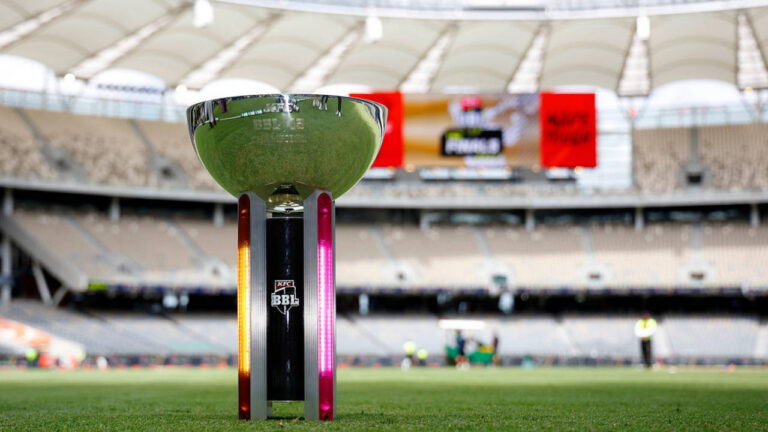
BBL explainer: what does the Melbourne merger mean, and what happens next?

- Will There Be Eight Teams in the BBL Next Season?
- So, Will the Melbourne Stars and Melbourne Renegades Play Next Season?
- How Will That Work Under the Tight Timeline?
- Why Does Cricket Victoria Want to Pursue This Path?
- What Has Been the Reaction from Other Australian States?
- How Have the Players and the ACA Reacted?
- What Does This Mean for the BBL Fan Base?
- What Happens Next?
It has been an incredibly chaotic week in Australian cricket with regards to the aggressive push to introduce private investment into the Big Bash League (BBL). With numerous unknowns surrounding how this massive restructuring will play out, stakeholders across the country are searching for clarity. Nothing has officially progressed as of yet, and formal moves in the privatization process cannot be made until after the six state executives and chairs meet with Cricket Australia (CA) in Melbourne next week. A definitive decision on whether to proceed to the next phase of the privatization plan is expected to come on June 15. To help make sense of the situation, this is our detailed BBL explainer: what does the Melbourne merger mean, and what happens next? as we look at what is known, what remains uncertain, and what lies ahead.
Will There Be Eight Teams in the BBL Next Season?
Yes. This is guaranteed. There was never any intention on Cricket Australia’s part to make changes to the competition structure for the 2026-27 season. Private investment, if successfully introduced, was not slated to become part of the league’s framework until the 2027-28 season. Consequently, fans can expect an eight-team BBL competition next season, with each team playing ten home and away matches followed by the finals. Crucially, two of those eight teams will still be based in Melbourne.
So, Will the Melbourne Stars and Melbourne Renegades Play Next Season?
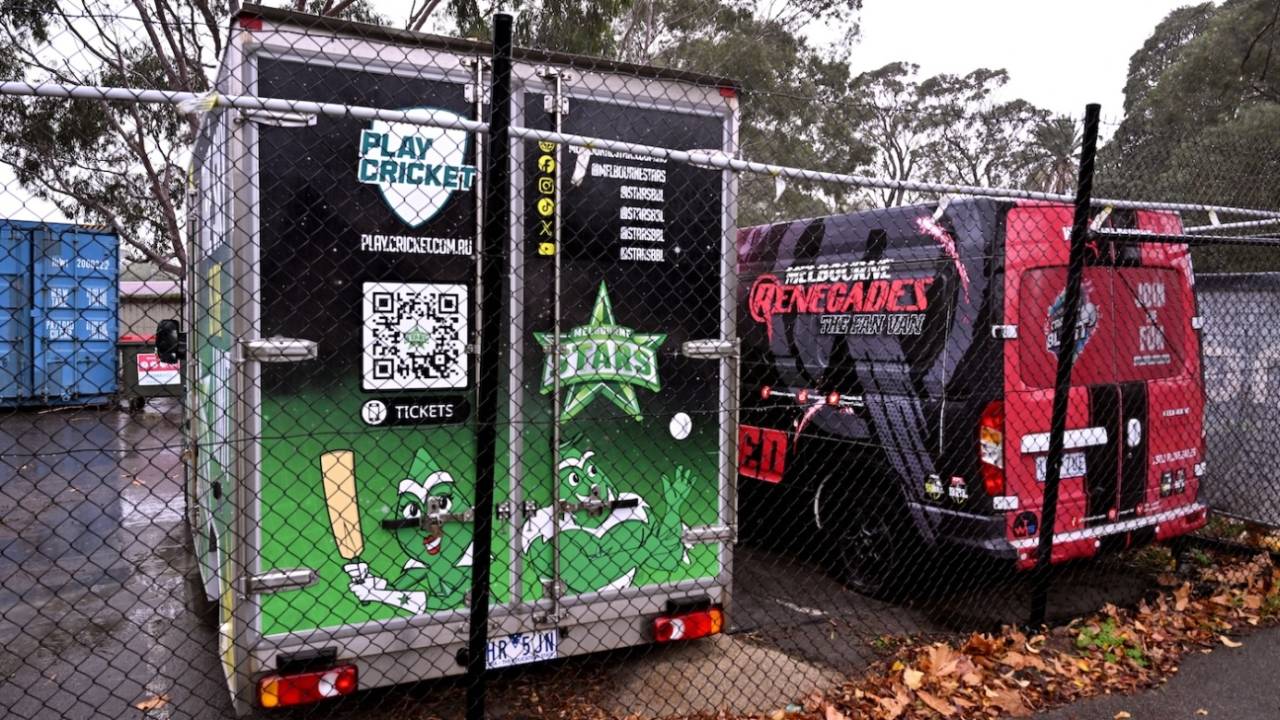
It is highly complicated, and this specific issue represents the eye of this week’s administrative storm. On Tuesday, Cricket Victoria (CV) made a major announcement, revealing it has already made administrative decisions to merge the operations of both teams under a single brand. This brand will be run directly by Cricket Victoria and will play under a completely different nickname and color scheme.
The ultimate intention of Cricket Victoria is to sell the second team—currently the Melbourne Renegades—to a private investor before the 2026-27 season. Once purchased, the private investor would have the freedom to rename and re-brand the franchise, mirroring the process seen with several of the Hundred franchises sold in the UK last year.
Following a wave of backlash on Wednesday, Cricket Australia chief executive Todd Greenberg stepped in to clarify the situation. He stated that while he was “aware of Cricket Victoria’s intentions,” he emphasized that “there’s still plenty of work to be done and nothing has been decided or approved as yet.”
On the balance of probabilities, given the administrative actions Cricket Victoria has taken this week, it is difficult to see how a team named the “Stars” will feature in the competition next season. However, nothing has been officially confirmed. While there is a chance a “Renegades” team will take the field, what that team will actually look like remains entirely unknown.
How Will That Work Under the Tight Timeline?
This is a major question mark. Many find it hard to believe that such sweeping changes can be executed within five months before the Women’s Big Bash League (WBBL) season begins. This is especially true considering the hybrid privatization model has not even been approved, let alone testing the market with potential buyers and running a formal acquisition process.
Despite these doubts, Cricket Victoria chief executive Nick Cummins remains adamant that the entire transition can be finalized within a couple of months. He has already executed the necessary internal administrative moves within the organization to plan for this scenario. Furthermore, a contingency plan has been established for the Renegades if a prospective buyer cannot assume control in time; a caretaker administration is already being formed to operate the team as the Renegades in its current form for the upcoming season.
Why Does Cricket Victoria Want to Pursue This Path?
Victoria’s strategy has always been to sell one of its two BBL teams outright once it voted in favor of privatization. This would allow them to run the remaining team more efficiently alongside a 49% minority investor—similar to the models Western Australia and Tasmania intend to implement for the Perth Scorchers and Hobart Hurricanes, respectively. Victoria has historically faced difficulties in adequately spreading its financial and operational resources across two separate teams. Additionally, Victoria was hit harder financially by the COVID-19 pandemic than most other states, which has uniquely impacted its current balance sheet and shaped its perspective on what is required to safeguard the future of cricket in the state.
The decision to merge the Stars and Renegades under a neutral name was informed by polling conducted with member focus groups earlier this year. Nick Cummins explained that Renegades fans explicitly stated they would not support the Stars if their own team was renamed and sold. Conversely, neutral Victorians who currently support neither franchise indicated they would support a team wearing state colors. To avoid alienating a major portion of the local fan base, Cricket Victoria elected to attempt to unite the two factions under one banner.
The timing of the announcement—coming just two weeks before the critical privatization vote—was driven by concerns over losing staff and sponsors due to short-term uncertainty. Cummins felt significant time pressure to act after the initial privatization proposal was rejected in April.
What Has Been the Reaction from Other Australian States?
The reaction from other state associations has ranged from mild frustration to outright fury, particularly from New South Wales, Queensland, and South Australia. These three states demanded an emergency phone hook-up with Cricket Australia on Thursday to express their intense frustration at being completely blindsided by Cricket Victoria’s sudden announcement. They also questioned whether CA was complicit in allowing the announcement to be made public ahead of next week’s state meetings and the ultimate privatization vote.
Western Australia and Tasmania also joined the call, which featured chief executives and chairs from five states, alongside CA chief executive Todd Greenberg and CA chair Mike Baird. Notably, Victoria was excluded from this emergency discussion. Prior to the hook-up, Cummins had sent an email to his state counterparts and attempted to contact them individually to explain the rationale behind his actions.
Following the heated call, Todd Greenberg released a statement acknowledging the friction: “The timing of the news about Cricket Victoria’s intentions in the event of private investment was not ideal. But we understand their challenges.”
Meanwhile, Cricket NSW remains deeply frustrated that its alternative proposal—to self-fund the BBL without relying on private investment—has not received a proper hearing from CA. This proposal is understood to be on the agenda for discussion at next week’s state executives’ meeting. At the heart of this conflict is a fundamental disagreement over CA’s long-term financial projections. CA and the states supporting privatization believe CA’s balance sheet will be in a bleak state by 2031 without an influx of private money. Cricket NSW, however, views these projections as wildly pessimistic and argues that the game’s finances can be safely managed and grown without selling off BBL assets to external investors.
How Have the Players and the ACA Reacted?
The players have reacted with a mix of anger and anxiety regarding their career futures. Paul Marsh, the chief executive of the Australian Cricketers’ Association (ACA), released the strongest statement on Wednesday, declaring: “Cricket Victoria’s announcement about a merger between the Stars and Renegades with the introduction of a new, privately owned club has created confusion, uncertainty and anxiety amongst players.”
Marsh firmly reiterated that under the current Memorandum of Understanding (MOU) between CA, the states, and the ACA, any privatization of Big Bash clubs requires formal agreement with the players’ association. While discussions regarding a potential agreement are ongoing, Marsh emphasized that no deal is imminent, making any talk of privatizing teams for the upcoming season entirely premature.
As the news broke, players from both Melbourne clubs contacted various media outlets to seek clarity on what was happening. Broadly, players continue to feel genuine frustration regarding the overall state of the BBL, particularly the pay structure for top-tier players compared to highly lucrative rival leagues operating overseas. For its part, CA has remained firm that it will not renegotiate the MOU until the states officially agree upon a privatization model.
What Does This Mean for the BBL Fan Base?
For dedicated supporters of both Melbourne franchises, there is a justifiable feeling of disenfranchisement. This is especially true for younger fans born this century who have only ever known the BBL in its current format and have passionately supported either the Stars or the Renegades for the last 15 years. How these fans will react if Cricket Victoria’s unified vision is implemented this year remains to be seen.
More broadly, there appears to be a general malaise among Australian cricket fans regarding how poorly the entire privatization push has been communicated and managed by both Cricket Australia and the state bodies.
What Happens Next?
The crucial turning point will occur on June 15, when the state chairs meet to vote on the hybrid privatization proposal. This model is designed to allow each individual state the autonomy to decide whether or not to pursue private investment. The vote will follow four days of intensive, in-person meetings next week between state executives and CA, where existing frustrations and fine details will be thoroughly debated.
For the proposal to progress to the next phase, it is understood that only four states must vote in favor, though there is a strong desire to ensure that any dissenting states are not vehemently opposed to the self-determination model. If passed, the states wishing to immediately pursue private investment—currently Victoria, Western Australia, and Tasmania—will jointly test the market alongside CA and their appointed financial consultants, the Raine Group.
This market-testing phase will replicate the process used for the Hundred franchise sales in the UK, where potential international and domestic buyers are sounded out and valuations of each club are established before moving to a formal sales process. Despite Victoria’s insistence that this can be completed in a matter of months, the precise timelines for these transactions remain highly unclear.