DC’s Home Discomfort: Coach Laments ‘Away Venue’ Feeling at Arun Jaitley Stadium

A Home Ground That Feels Foreign
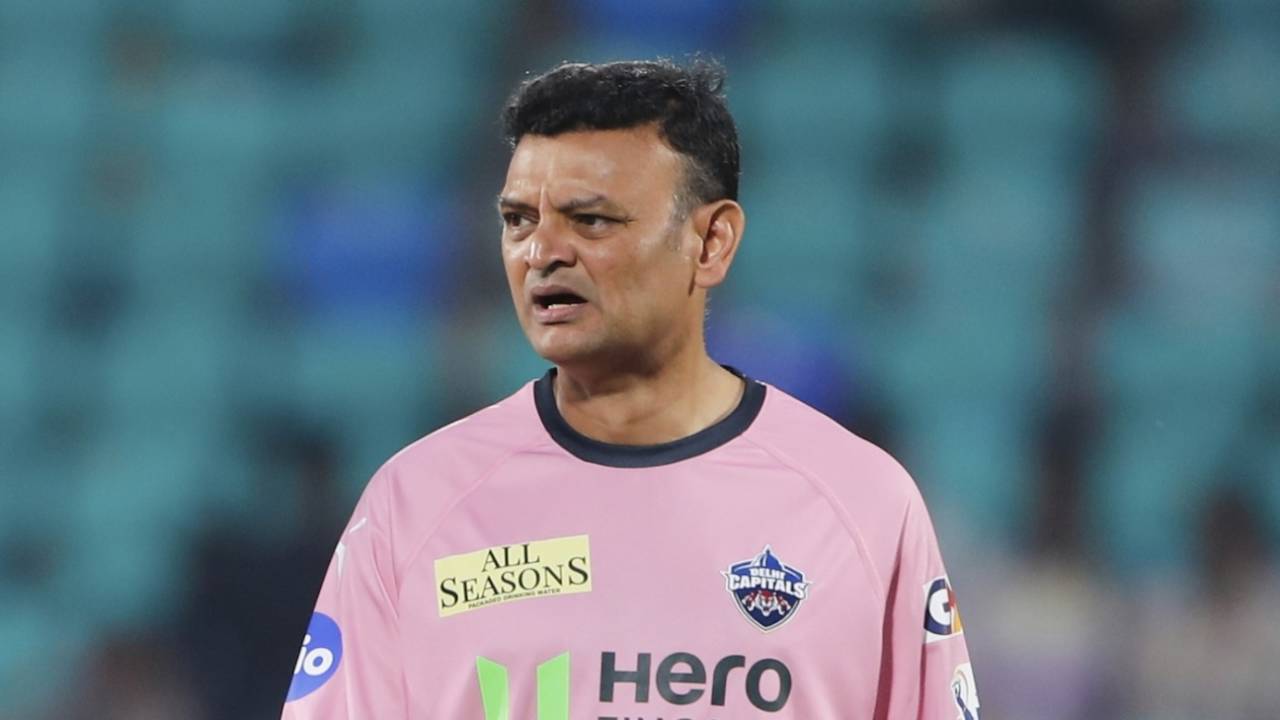
Delhi Capitals (DC) have been grappling with an unusual problem in IPL 2026: their home ground, the Arun Jaitley Stadium, has become a source of confusion and frustration rather than comfort. After a tense victory over Rajasthan Royals (RR) in Delhi on Sunday, head coach Hemang Badani made a startling admission.
“We’ve stopped discussing the surface,” Badani said. “As far as I’m concerned, we play this venue as an away venue.”
It was a candid assessment from a coach whose team has managed only two wins in seven home matches this season. The struggles have been stark: DC have seen a mammoth total of 264 chased down with seven balls to spare, and in the very next home game, they were skittled out for just 75.
Numbers Don’t Lie: A Tale of Two Seasons
Badani broke down the disheartening statistics during the post-match press conference.
“If you’re able to break the season into two halves – about what’s happened at home and what’s happened away – we’ve had four wins in six games away and we’ve primarily struggled at home (two wins in seven games),” he said. “From last year, we’ve played five games at this venue, plus seven now, making it 12 matches. We’ve only had three wins, one of them being a Super Over. That pretty much tells you how the surface has been for us.”
The contrast is jarring. On the road, DC have looked like a formidable unit, adapting and executing their plans with confidence. At home, uncertainty has reigned.
Unpredictable Pitches: A Selection Nightmare
According to Badani, the root cause of DC’s home discomfort is the sheer unpredictability of the surfaces. The team has played on three different pitches at the Arun Jaitley Stadium this season, and each has behaved differently on every occasion.
“We are getting bowled out for 60; we are getting bowled out for 150; we are also scoring 260,” Badani explained. “We don’t know how Pitch No. 4 will play, how Pitch No. 5 will play, how Pitch No. 6 will play. We have played on three pitches and all of them have been different each time.”
This inconsistency, he argued, makes proper preparation nearly impossible. “When you know this pitch will have a par score of 180, or 200, or 250, you structure the side accordingly. But here… whatever is happening is happening.”
Traditionally, teams look for clues by examining the grass, the texture, and the colour of the pitch before a match. At the Arun Jaitley Stadium, those indicators have proven unreliable.
“You generally would ideally look at the grass that’s available on the surface, the texture of the surface, the colour of the surface. But each time we’ve turned up here, we’ve got something very different,” Badani said. “So it is what it is. We accept it and move on.”
Sunday’s Win: A Tactical Adjustment
Despite the win on Sunday that kept their playoff hopes alive, DC were not entirely happy with the pitch they were presented with.
“Speaking of this game, I think even if you look at their innings, they were 160 for 2 after 14 overs and then they hardly got runs in the end – I think they got about 33 in the last six and we picked up six more wickets,” Badani analysed. “The same happened to us where we slowed down a little bit but we were cautious because we had a target available to us.
“They had to set a target and we were just looking to create the game because the ball was starting to reverse. The ball was holding a bit on the surface too. It wasn’t easy to bat once the ball got older and hence we decided to take the game deep; go hard at the top but take the game deep in the end.”
It was a pragmatic approach, born from necessity rather than strategy, a clear sign that the team is constantly having to adapt to conditions that seem to change match by match.
The Bigger Question: Should Teams Control Their Pitches?
When asked whether the BCCI should allow IPL franchises to decide the nature of their home pitches to ensure a genuine home advantage, Badani advocated for consistency over control.
“If it has to be a consistent decision for all (then yes), but it should at least be where you know at least what to expect,” he said. “Here, we don’t know what the surface will do.”
Delhi Capitals’ home season has become a case study in how a lack of pitch consistency can undermine a team’s performance. While they continue to fight for a playoff berth, the team’s true challenge may not be the opposition, but the very ground they call home.