Watch- Sai Sudarshan’s Comical Hit Wicket Copied In England – The Hit-Wicket Phenomenon: From IPL 2026 to T20 Blast
The Rare Art of the Self-Dismissal
Cricket is a game of fine margins, where a millimeter can be the difference between a glorious boundary and an embarrassing exit. Recently, the cricketing world has been abuzz with discussions surrounding the ‘hit wicket’ dismissal, a rare way to go out that has suddenly found itself in the spotlight across two different continents. Both Sai Sudarshan in the IPL 2026 and Ryan Higgins in the T20 Blast have fallen to this peculiar fate, sparking debates about technique, pressure, and the evolving nature of T20 batting.
Sai Sudarshan’s IPL Heartbreak
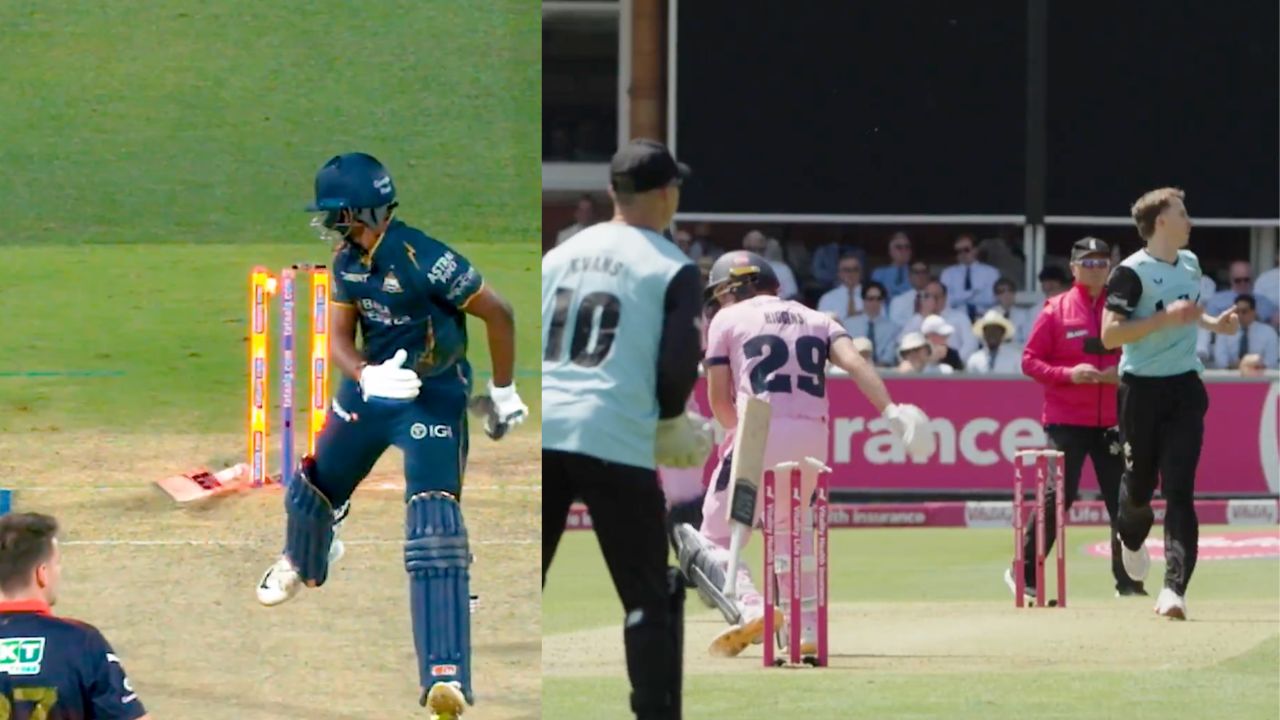
During the high-stakes atmosphere of the IPL 2026 Qualifier 1, Gujarat Titans opener Sai Sudarshan found himself at the center of a viral moment. While chasing a daunting target set by the Royal Challengers Bengaluru (RCB), Sudarshan was playing with aggression, looking to take the game to the opposition. After dispatching Jacob Duffy for a series of boundaries, his momentum proved to be his undoing. In a follow-through that went slightly awry, Sudarshan lost his grip on the bat, which subsequently crashed into his own stumps.
The dismissal was textbook in terms of the Laws of Cricket, yet it left the cricketing fraternity divided. To some, it was a harsh way to end a promising innings; to others, it was simply the risk one takes when playing with such reckless abandon in the fast-paced T20 format.
Replicating the Error in the UK
Remarkably, just two days after the spectacle in Dharamsala, the script repeated itself in the United Kingdom during the T20 Blast clash between Middlesex and Surrey. Ryan Higgins, representing Middlesex, suffered an almost identical fate. Attempting to punch a delivery from Tom Curran through the cover region, Higgins lost control of his willow. The bat soared high before descending directly onto the leg bail. It was an unfortunate end to his stay at the crease, as he departed for 13, contributing to Middlesex’s total of 143/8.
The Pressure of Modern T20 Cricket
Why are we seeing these dismissals with such frequency? The modern T20 game demands that batters take extreme risks from the very first ball. When a player is asked to play with such high intensity, the margin for error shrinks significantly. The requirement to stand deep in the crease or swing with maximum force often compromises the balance required to maintain a secure grip on the handle.
As witnessed in both the Sudarshan and Higgins cases, the ‘follow-through’ has become a danger zone. When a player strikes the ball with full power, the bat’s momentum is often difficult to control. If the handle is slick from sweat or the grip is compromised, the physics of the swing almost invite the bat to arc backward toward the stumps. To avoid such a fate, players might need to reconsider their positioning in the crease or be more diligent about changing gloves to ensure a secure, dry grip throughout the innings.
Looking Ahead: GT’s Path to Redemption
While the hit-wicket drama provided an unexpected talking point, the Gujarat Titans now face a different set of challenges. Following their defeat to RCB—a match where Rajat Patidar’s explosive 93 set the tone for a record-breaking 254/5—the Titans must regroup for Qualifier 2 against the Rajasthan Royals. The pressure is mounting, especially with the emergence of young talent like Vaibhav Sooryavanshi, whose strike rate of over 240 has terrorized bowling attacks this season. Whether the Titans can overcome these tactical and psychological hurdles remains one of the most compelling stories of the 2026 season.
Conclusion
The hit-wicket dismissals of Sai Sudarshan and Ryan Higgins serve as a reminder that in the frantic world of T20 cricket, sometimes the biggest enemy is not the bowler, but one’s own technique under pressure. As the tournament reaches its climax, teams will need to be as disciplined with their fundamentals as they are with their power-hitting, lest they find themselves out by their own hand.