ICC Proposed Rule Changes: Pink Ball in Tests, ODI Coach Roles & More


- Introduction: A New Era for International Cricket Regulations
- The Revolutionary Red-to-Pink Ball Shift in Test Matches
- Empowering Head Coaches: On-Field Tactical Access in ODIs
- Streamlining T20Is: Shorter Innings Breaks
- Cracking Down on Suspect Bowling Actions with HawkEye
- Conclusion: Crucial Decisions in Ahmedabad
Introduction: A New Era for International Cricket Regulations
The International Cricket Council (ICC) is on the verge of introducing a series of groundbreaking rule changes that could fundamentally transform how international cricket is played and managed across all three primary formats: Test matches, One Day Internationals (ODIs), and Twenty20 Internationals (T20Is). These proposed changes represent some of the most significant tactical and operational adjustments the sport has seen in recent years, aiming to tackle issues ranging from weather disruptions to real-time officiating efficiency.
The sweeping proposals were recently tabled and discussed during a virtual meeting of the ICC Chief Executives Committee. Notably, former Indian captain Sourav Ganguly attended the discussions in his capacity as the head of the ICC Cricket Committee. While these discussions have generated substantial interest, the final verdict on their implementation rests with the ICC Board, which is scheduled to meet in Ahmedabad on May 30. If approved during this key administrative gathering, the newly minted rules are expected to come into effect starting October 1, marking a new chapter in the international cricketing calendar.
The Revolutionary Red-to-Pink Ball Shift in Test Matches
Perhaps the most talked-about proposal under consideration involves a radical shift in Test cricket ball regulations. Traditionally, Test matches are played using the standard red cherry, with pink balls reserved strictly for specially designated day-night Test fixtures. However, under the new proposal, teams could be permitted to transition from the traditional red ball to a pink ball during a standard, daytime Test match under specific circumstances.
This transition would be triggered if inclement weather, such as heavy rain or bad light, severely disrupts the schedule, necessitating that play continue under floodlights to avoid lost overs. By allowing a switch to the pink ball, which is designed for optimal visibility under artificial lights, the ICC hopes to minimize match delays and draw results caused by failing natural light. However, this rule will not be applied universally or automatically. Crucially, the regulations dictate that both competing teams must mutually agree to this contingency option before the bilateral series commences. Without prior, formal agreement from both participating nations, the traditional red ball protocol will remain mandatory.
Empowering Head Coaches: On-Field Tactical Access in ODIs
Another major structural adjustment is being planned to bridge the gap between coaching staff and players during active matches. Currently, strict regulations govern who can enter the playing arena during a match. In ODI cricket, only substitute players are permitted to cross the boundary ropes to deliver drinks, equipment, and basic messages during scheduled drinks intervals. Head coaches and tactical staff are currently restricted to the sidelines or dressing rooms, unable to directly interact with the playing eleven on the field.
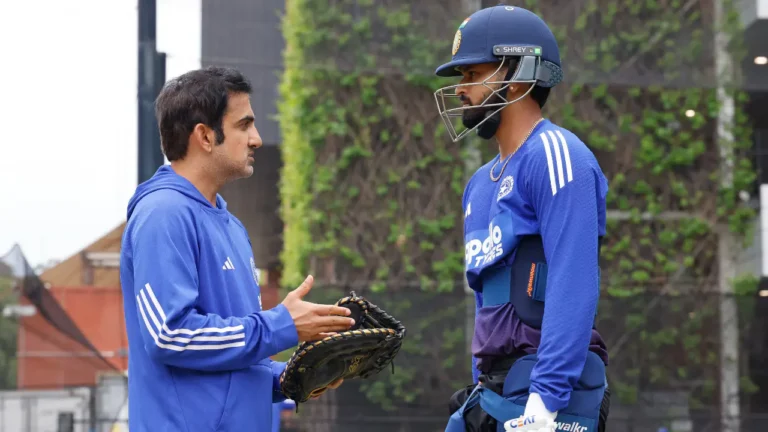
The ICC is looking to alter this dynamic by allowing head coaches to physically walk onto the field during designated drinks breaks in ODI matches. This change would enable coaches to engage in direct, face-to-face tactical discussions with captains and players, facilitating immediate adjustments to game plans. While this protocol is already standard practice in T20Is during strategic timeouts, extending it to ODIs represents a major shift. One detail still awaiting clarification is the dress code; current rules require anyone entering the field of play to wear the official team uniform, and it remains unconfirmed whether head coaches will be mandated to wear the team jersey during these brief on-field interventions. It is also important to note that this proposal is strictly intended for ODIs and will not be introduced to Test cricket.
Streamlining T20Is: Shorter Innings Breaks
In a bid to maintain the fast-paced nature of the shortest format, the ICC is targeting the duration of Twenty20 Internationals. Under the proposed changes, the innings break in T20I matches would be reduced from the current 20 minutes down to just 15 minutes. This five-minute reduction is designed to tighten match schedules and keep the audience engaged. For the players, however, this change means a tighter turnaround time. Teams will have to quickly adapt, with five minutes less to rest, recuperate, discuss bowling and batting strategies, and transition into the second innings of the match.
Cracking Down on Suspect Bowling Actions with HawkEye
The ICC is also taking a much stricter stance on maintaining the integrity of bowling actions. Under current protocols, if a bowler’s action is deemed suspicious by on-field officials, they are typically reported to the match referee post-match, triggering a formal review process. This means a bowler with a potentially illegal action can continue bowling throughout the active game.
To address this, the new proposal suggests giving on-field umpires direct, real-time access to HawkEye technology during matches. This would allow officials to monitor and evaluate suspicious bowling actions instantaneously while the match is underway. While the precise operational mechanics and technical parameters of this real-time monitoring system are yet to be finalized, the ICC’s intent is clear: to establish a highly rigorous, technology-driven deterrent against illegal bowling actions at the highest level of international competition.
Conclusion: Crucial Decisions in Ahmedabad
With the ICC Board meeting scheduled for May 30 in Ahmedabad, the cricketing world will be watching closely. If these proposals secure the necessary approvals, the landscape of international cricket will look vastly different starting October 1. From tactical coaching interventions to real-time technological scrutiny of bowling actions and highly flexible ball-switching rules in Test cricket, these changes aim to modernize the sport while preserving its competitive core.