Irfan Pathan Thrashed For ‘Fatherly’ Defending Vaibhav Sooryavanshi – Irfan Pathan Faces Backlash Over Defense of Vaibhav Sooryavanshi’s Body-line Ordeal

The Controversy at the IPL 2026 Qualifier
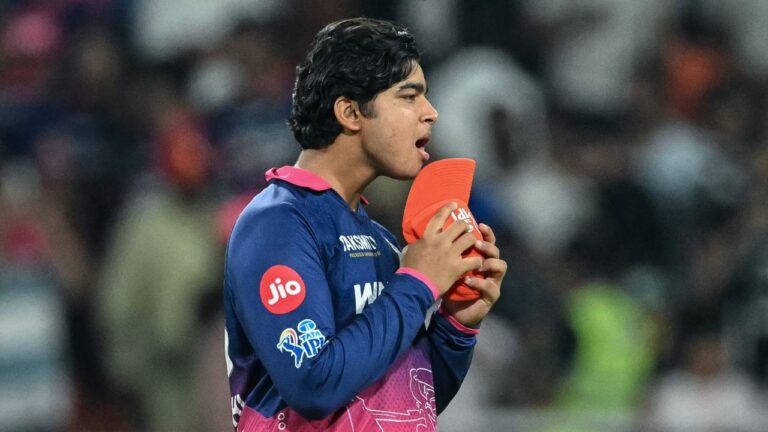
The IPL 2026 Qualifier 2 between the Rajasthan Royals and the Gujarat Titans was supposed to be a showcase of young talent and high-stakes cricket. While 15-year-old Rajasthan Royals prodigy Vaibhav Sooryavanshi captivated the audience with a breathtaking 96 off 47 balls, his innings became the epicenter of a polarizing debate regarding the ethics of fast bowling tactics. As he took to the crease, he found himself repeatedly targeted by short-pitched, body-directed deliveries from seasoned Gujarat Titans pacers Kagiso Rabada and Mohammed Siraj.
Understanding the Body-line Tactic
To understand the outcry, one must look at the history of the tactic employed. Often referred to as ‘fast leg theory,’ the body-line approach is designed to intimidate the batter rather than strictly seek a wicket through traditional means. Famously utilized by England during the 1932–33 Ashes series against Don Bradman, this strategy involves pitching the ball short on or just outside the leg stump. The trajectory forces the ball to rear up toward the batter’s chest and head, leaving them with few options: absorb a painful blow, attempt an awkward defensive maneuver, or risk a catch to waiting fielders.
The Battle: Rabada and Siraj vs. The Teenager
During the Qualifier 2 clash, the Gujarat Titans clearly identified a potential vulnerability in the young Sooryavanshi. Both Kagiso Rabada and Mohammed Siraj consistently dug the ball into the pitch, aiming for the youngster’s ribs and helmet. The deliveries were frequently angled into his body from around the wicket, forcing the teenager to fend awkwardly or execute evasive maneuvers. Despite the intimidation, Sooryavanshi showed remarkable composure, taking several blows to the gloves before ultimately falling to a short delivery from Rabada that resulted in a top-edged catch.
Irfan Pathan’s Stance and the Subsequent Backlash
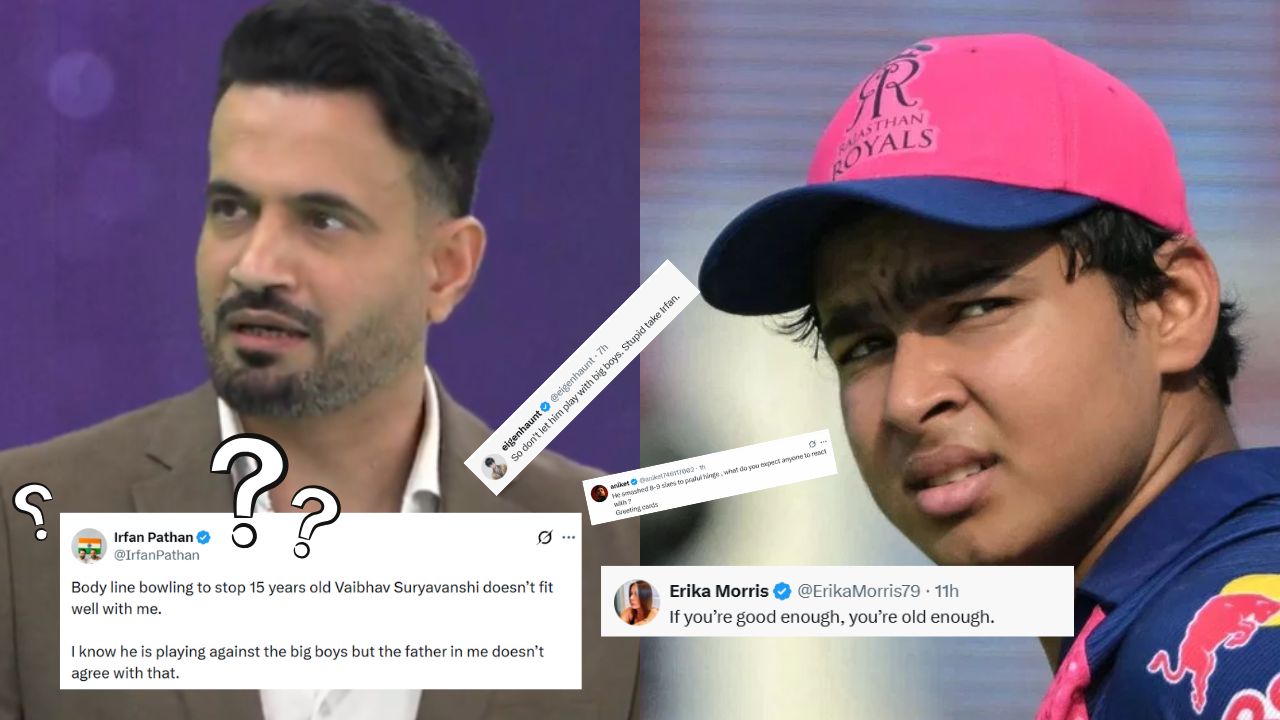
Following the match, former Indian all-rounder Irfan Pathan took to social media to express his discomfort with the bowling strategy. Pathan stated, ‘Body line bowling to stop 15 years old Vaibhav Suryavanshi doesn’t fit well with me. I know he is playing against the big boys but the father in me doesn’t agree with that.’ While Pathan acknowledged that no rules were violated, he argued that there is a distinct boundary between competitive sports and the deliberate targeting of a minor with high-velocity, dangerous deliveries.
This sentiment, however, was met with significant backlash from the online cricket community. Many fans argued that professional cricket, particularly at the IPL level, is a meritocracy where age should not grant special treatment. Critics of Pathan’s stance suggested that if a player is deemed skilled enough to compete at the highest level, they must be prepared to face the same tactical pressures as veteran international players.
Sooryavanshi’s Performance and the Match Outcome
Despite the intense pressure, Vaibhav Sooryavanshi’s performance remained the standout highlight of the Rajasthan Royals’ innings. His explosive knock featured 8 fours and 7 sixes, anchoring the side after early losses. Partnering with Ravindra Jadeja, he set the foundation for a total of 214 for 6. Unfortunately for the Rajasthan Royals, this was not enough to secure a victory. The Gujarat Titans responded with a dominant chase, spearheaded by a masterclass 104 off 53 balls from Shubman Gill, combined with 58 from Sai Sudharsan. The Titans chased down the target with 7 wickets and 8 balls to spare, effectively ending the Rajasthan Royals’ campaign and setting up their appearance in the IPL 2026 Final.
Ultimately, the match left spectators with two distinct talking points: the historic run chase by the Gujarat Titans and the unresolved ethical question of how young players should be tested in the professional arena. As the tournament moves toward its conclusion, the debate sparked by Pathan serves as a reminder of the thin line between hard-nosed cricket and player welfare in the modern era.