Robinson double-strike moves England closer between showers in First Test

Dominance Amidst the Elements
In a contest defined as much by the fickle English weather as by the quality of the bowling, the first Test match remains firmly in the balance—or rather, firmly in England’s control. A Robinson double-strike moves England closer between showers, leaving New Zealand in a precarious position as they attempt to chase down a daunting target of 254 runs.
The Impact of Ollie Robinson
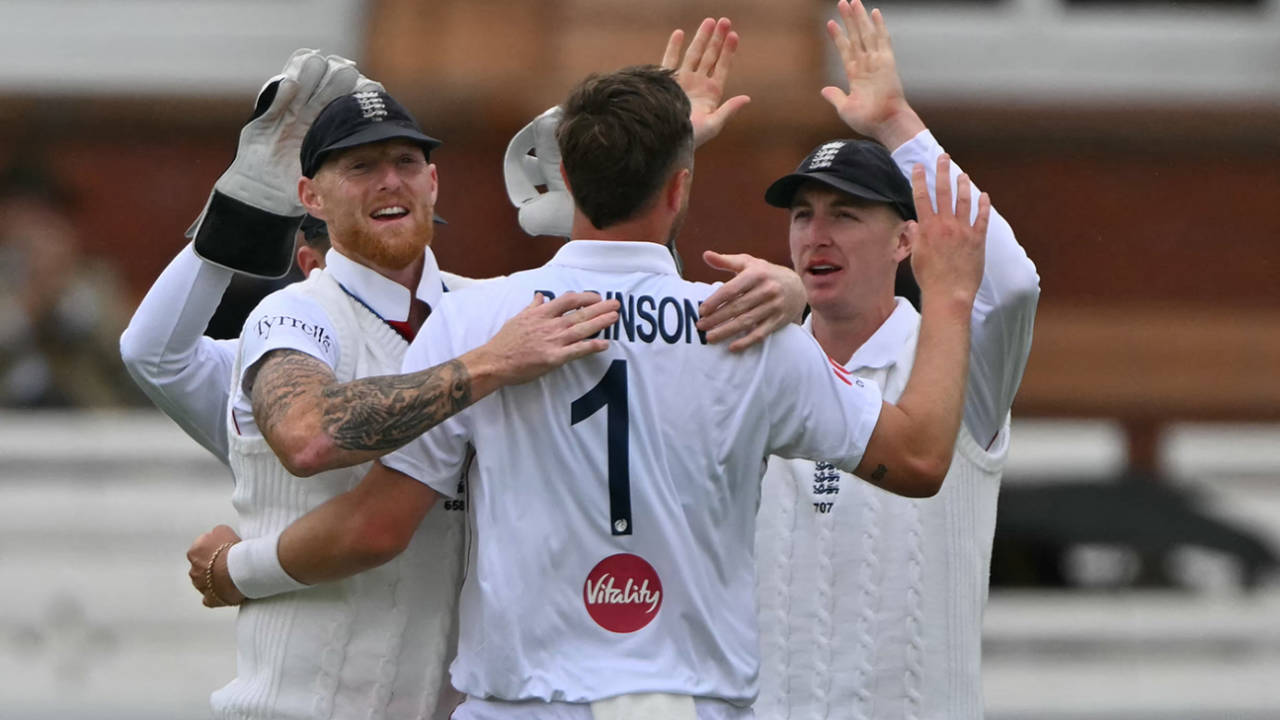
Ollie Robinson has firmly stamped his authority on this match. After an absence from the Test side that lasted two years, his return has been nothing short of spectacular. Following an impressive first-innings haul of 5 for 39, Robinson demonstrated his tactical brilliance and relentless accuracy on the third day. Operating from the Pavilion End, he dismantled the New Zealand top order just as the clouds parted momentarily, proving his worth as a premier seam bowler in testing conditions.
His dismissal of Rachin Ravindra—who had been desperately looking to avoid a king pair—was a masterclass in bowling from around the wicket. By angling the ball up the slope, Robinson found the off-stump, leaving the batter with no answer. Moments later, he trapped the dangerous Daryl Mitchell lbw for a duck. Even with the assistance of the Umpire’s Call on review, the dismissal highlighted the immense pressure England is exerting on the touring side.
A Stop-Start Affair
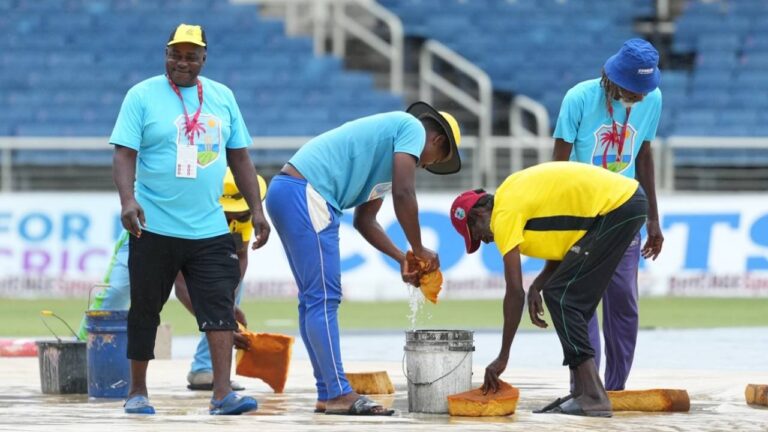
The narrative of this Test has been heavily influenced by the weather. With only 9.4 overs possible across the first two sessions of Saturday, the players were forced to battle the conditions as much as the opposition. The frustration was evident on both sides, with multiple rain delays punctuating an intense hour of play. Despite the damp conditions and the gloom, England’s captain, Ben Stokes, remained aggressive, utilizing leg slips to crowd the batters and force errors.
New Zealand’s Struggle for Survival
New Zealand finds themselves in a dire situation, sitting at 55 for 5 and still requiring 199 runs to win. Devon Conway has been the lone beacon of resistance for the visitors. Unbeaten on 19 off 55 deliveries, his innings has been one of survival against the moving ball. He even endured a painful blow to the glove from a sharp Josh Tongue delivery, yet he remains at the crease alongside Tom Blundell, tasked with the near-impossible job of rescuing the match over the final two days.
Tactical Nuances and Looking Ahead
The pitch has faced criticism for being overly skewed in favor of the seamers, but the bowlers have certainly made the most of the surface. England’s total of 226 in their second innings, underpinned by a resilient 57 from Gay, provided enough of a cushion to allow the bowlers to hunt for wickets without the pressure of a defensive mindset. Jamie Smith’s decision to stand up to the stumps during Mitchell’s short stay was a subtle but effective tactical shift that paid dividends for the bowling unit.
As the teams head into the final two days of the Test, the forecast remains a significant factor. With England needing only five more wickets to secure a comprehensive victory, the urgency to get back onto the field is palpable. However, New Zealand’s ability to hang on—much like Conway’s gritty display—will dictate whether this match concludes quickly or drags into a tense finish. For now, the momentum lies squarely with the hosts, driven by the incisive spell of Robinson.
The fans, players, and pundits alike await the resumption of play, hoping that the clouds will clear long enough for the result to be determined on the field of play rather than by the rain that has so dominated the headlines this weekend.