‘High-quality’ Saleem limits damage despite extreme heat and unhelpful pitch

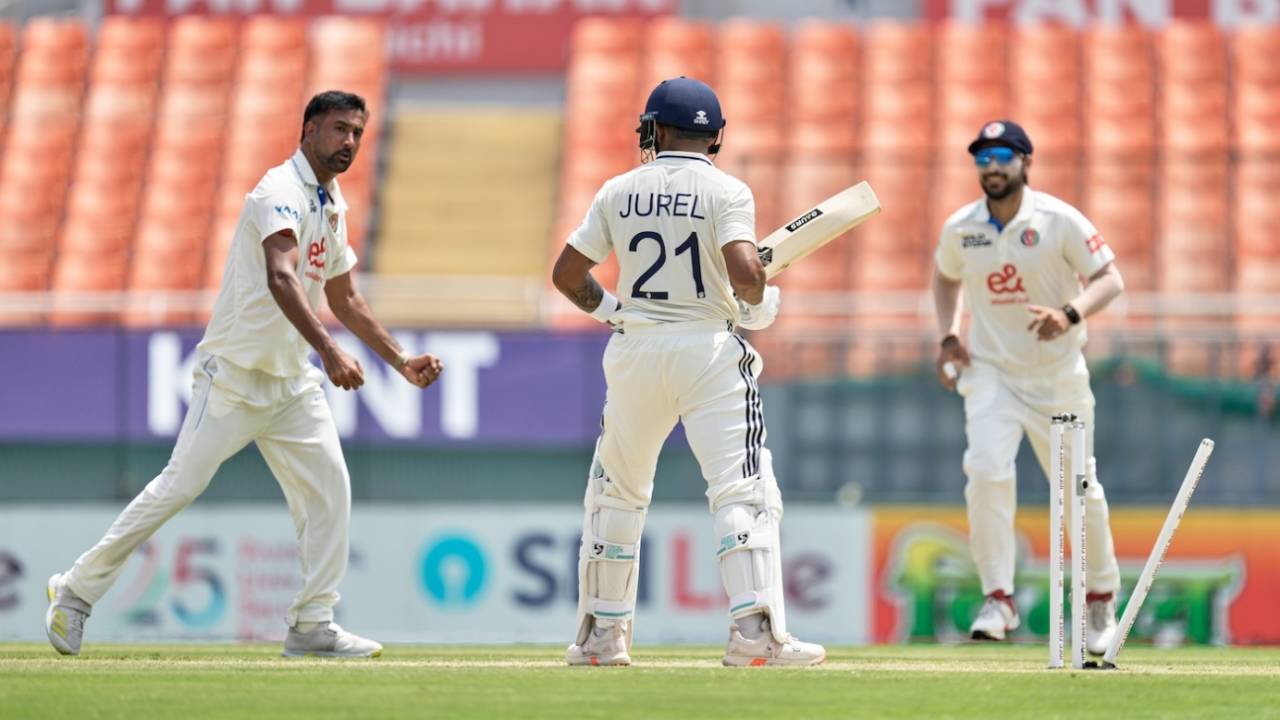
A Herculean Effort in Oppressive Conditions
In the sweltering heat of New Chandigarh, Afghanistan fast bowler Mohammad Saleem stood tall, delivering a performance that has earned him widespread acclaim. During the one-off Test match against India, Saleem claimed impressive figures of 6 for 140, proving his worth as a premier fast bowler on a track that offered very little assistance to seamers. Despite his heroic efforts, the broader narrative of the match remains tilted heavily in favor of India, as Afghanistan’s batting unit faltered under pressure, finishing day two at 113 for 5, still trailing by a massive 451 runs.
The Art of Consistent Bowling
Saleem’s ability to maintain pace and accuracy at 140kph in such taxing weather conditions was the highlight of the innings. Having already claimed the wickets of Yashasvi Jaiswal and B Sai Sudharsan on Saturday, he returned on day two to dismantle the Indian middle and lower order. His spell included the vital wicket of Shubman Gill, who was caught behind after a brilliant knock of 126. Saleem continued his assault by cleaning up Dhruv Jurel, Manav Suthar, and Mohammed Siraj, eventually forcing India to declare at 564 for 8.
Afghanistan head coach Richard Pybus was quick to laud the bowler’s resilience. ‘He was just fantastic,’ Pybus remarked. ‘If you come here and you take six wickets in extreme heat against high-quality batting, that goes very well—not just for him as a bowler, but for us as a side. He just held a length, and if you hold a length, you’re in the game the whole time.’
Peer Recognition from the Opposition
The sentiment was echoed by Indian all-rounder Washington Sundar, who acknowledged the sheer skill required to perform on an unhelpful surface. ‘That was honestly high-quality bowling,’ Sundar stated. ‘There was not much in the pitch for the seamers. Only when you hit the seam over a period of time do you sort of get a little bit of purchase. To hit the seam consistently over a number of overs takes a lot of skill and attitude.’
Sundar further highlighted the physical toll of Saleem’s performance, noting that his long, sustained spells of five or six overs demonstrated a level of character and toughness rarely seen in challenging conditions.
The Cost of Hesitation
While Saleem shone, the match was a cautionary tale for Afghanistan regarding their use of the Decision Review System (DRS). The team’s reluctance to challenge umpire decisions proved costly. Specifically, in the 89th over, two potential wickets—Gill and Rishabh Pant—were missed due to a lack of reviews, both of which were shown to be out on replay. This mirrored a similar error on Saturday involving KL Rahul, who capitalized on a missed review to score a century.
Reflecting on the tactical errors, Coach Pybus was transparent about the team’s shortcomings. ‘We were exceptionally rusty,’ he admitted. ‘There was a lack of conviction in decision-making. The skipper has a very short period to make those decisions, and he relies on input from the wicketkeeper and the bowler. We were obviously way off the pace with that, and it cost us dearly.’
As the Test match progresses, Afghanistan faces an uphill battle. While Saleem provided a blueprint for how to operate on flat surfaces, the team must address their batting instability and tactical decision-making if they hope to force a fightback in the remainder of the game. For now, Mohammad Saleem stands as the undisputed hero of the side, having done everything possible to keep his team relevant in the face of an overwhelming challenge.