Shan Masood on Captaincy Future and Structural Reforms After Pakistan’s Test Loss to Bangladesh
Shan Masood Deflects Captaincy Questions, Demands Structural Change
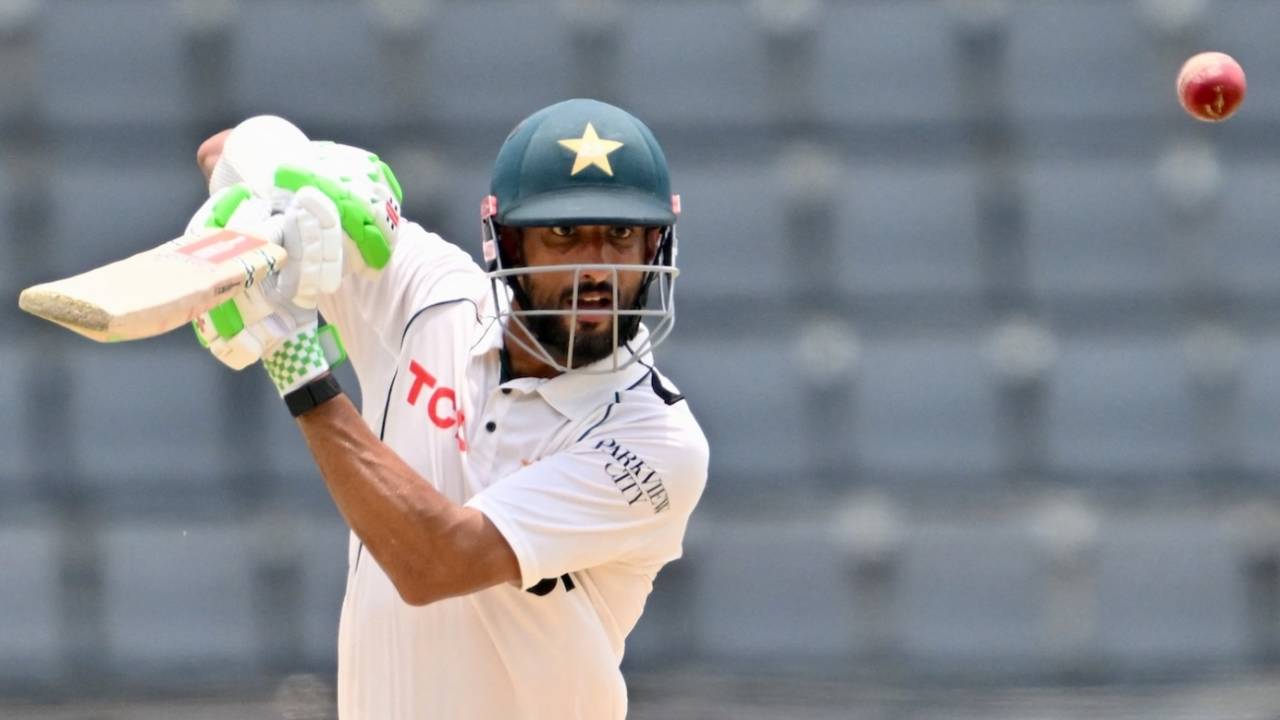
Following Pakistan’s 78-run defeat to Bangladesh in Sylhet, captain Shan Masood has opted to leave his leadership future in the hands of the Pakistan Cricket Board (PCB), while calling for deep, structural reforms within the national Test setup. The loss marks Bangladesh’s second consecutive series win over Pakistan and adds to a growing list of troubling records under Masood’s leadership.
Historic Lows Under Masood’s Captaincy
The defeat in Sylhet means Pakistan has now lost four consecutive Tests to Bangladesh — a first for any team outside Zimbabwe. It also equals their worst-ever streak of seven straight away losses in Test cricket. Masood’s captaincy record now stands at 12 losses in 16 Tests, the second-worst among Pakistani captains in terms of total defeats. Only Brendan Taylor and Shakib Al Hasan have lost more of their first 16 Tests as captain, each with 13 losses.
Under Masood, Pakistan finished bottom of the World Test Championship (WTC) points table in the previous cycle and currently sit eighth in the ongoing edition. These results have intensified scrutiny not just on his leadership, but on the direction of Pakistan’s Test cricket as a whole.
“Decision Lies with the PCB”
Initially reluctant to discuss his future, Masood later acknowledged that the choice is no longer his to make.
“My intentions are clean. I took on this job to improve our Test cricket. There are things that need to be discussed with the board, and the decision is always the board’s.”
He emphasized his commitment to the team, regardless of his role moving forward.
“It will always be my effort in any capacity — it doesn’t have to be as captain or even as a player. I’ve always worn this shirt with pride and put everything aside for this. Instead of just talking about change, we need to think about how to improve Pakistan’s Test cricket.”
Missed Chances and Costly Mistakes
Masood pointed to recurring issues in Pakistan’s performances: dropped opportunities and critical errors over the five-day format. In Sylhet, Pakistan had Bangladesh reeling at 116-6 on the first day, only for Litton Das’s century to guide a recovery to 278. This follows a familiar script from the 2024 home series against Bangladesh, where Pakistan declared at 448-6 in the first Test yet lost by 10 wickets, and had Bangladesh at 26-6 in the second Test before ultimately losing by six wickets.
“In both matches, we had significant chances,” Masood reflected. “We need to reflect — in batting, bowling, and fielding — and see where we lost the game. That’s how we’ll move forward.”
Personal Form and Team Composition
Meanwhile, Masood’s own place in the side has come under question. Across the two Tests in Bangladesh, he managed only one notable score — a 71 in the final innings — and averaged under 26 in the series. His overall career batting average after 46 Tests remains just above 30, though it climbs slightly to 34 in matches as captain.
He did highlight the disparity in pitch quality, praising Bangladesh’s surfaces for offering balance to both batters and bowlers, unlike Pakistan’s recent home pitches, which have been heavily skewed.
“Changes Needed Are Structural”
Resisting calls for wholesale player turnover — despite a squad averaging over 30 years of age and lacking in experience — Masood urged a more rational, long-term approach.
“Whether it’s a 40-year-old or an 18-year-old, what matters is whether they can fulfil the team’s needs. When you lose, you have to revisit things — you can’t keep saying everything is okay.”
“The changes needed are structural. Address root causes, not emotions.”
With emotions running high after another painful defeat, Masood’s plea is clear: Pakistan’s Test rebuilding must be deliberate, honest, and systemic. The PCB now faces critical decisions — not just about the captaincy, but about the future of Test cricket in the country.